
Canal Jug
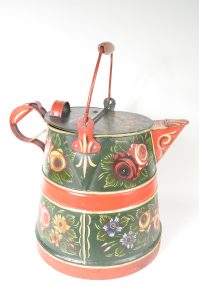
Narrowboats in the 19th century were commonly decorated with bold, colourful roses, castles and romantic landscapes. The decorations covered not only the boat’s exterior but effectively everything inside as well, from the kitchenware to the furnishings and even the horse’s harnesses.
The ‘roses and castles’ style came into fashion during the industrial revolution, when other traditional crafts were being replaced by mass production. It is not known precisely where the tradition originated from; however, there are clear influences of gypsy culture and similarities to folk art from Germany, Holland and even Asia.
The bright, cheerful decorations, unique to each artist, were a sign of pride for people working on the canals and solidarity with their fellow boaters.
The tradition still lives on today: a campaign has commenced in Britain and France to revitalise the run down early industrial canals and so too the art.
Foxton Locks, near Market Harborough, is the largest flight of staircase locks on the English canal system, with ten locks and side ponds on a hill – this allows canal boats to travel up and down the hill.
Building work on the locks started in 1810 and took four years to complete. In 1900 an incline plane was built to resolve the operational restrictions imposed by the lock flight. While this was in operation, the locks were not maintained and fell into decline. In 1908 the canal committee donated £1,000 towards renovations. However, the incline plane was not a commercial success and only remained in full-time operation for ten years; It was dismantled in 1926.
By a Harborough Museum Local Studies Research Volunteer
You may also be interested in
Other popular posts
The Harborough Toys
Rare 17th century wood and bone toys uncovered at the church of St Dionysius.
The Hallaton Helmet by Francesco Galluccio
The amazing replica Roman helmet created for Harborough Museum
Heritage Open Days
We've been giving people a look at unseen areas of The Symington Building