
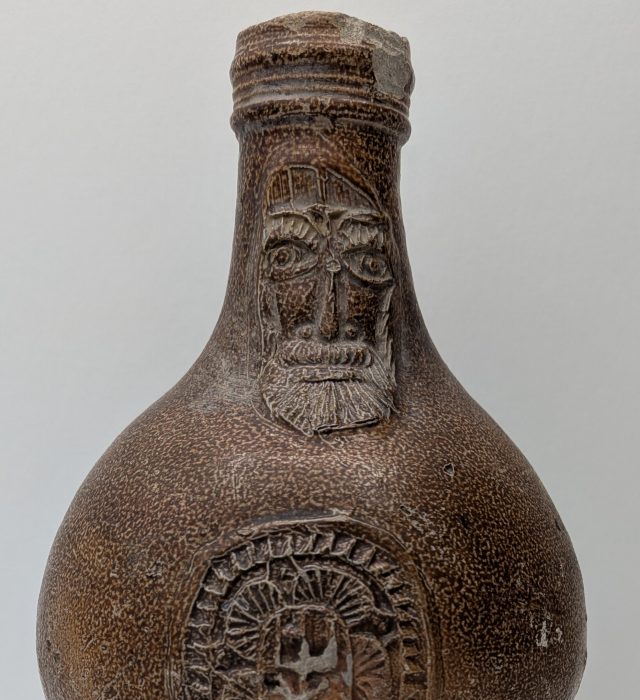
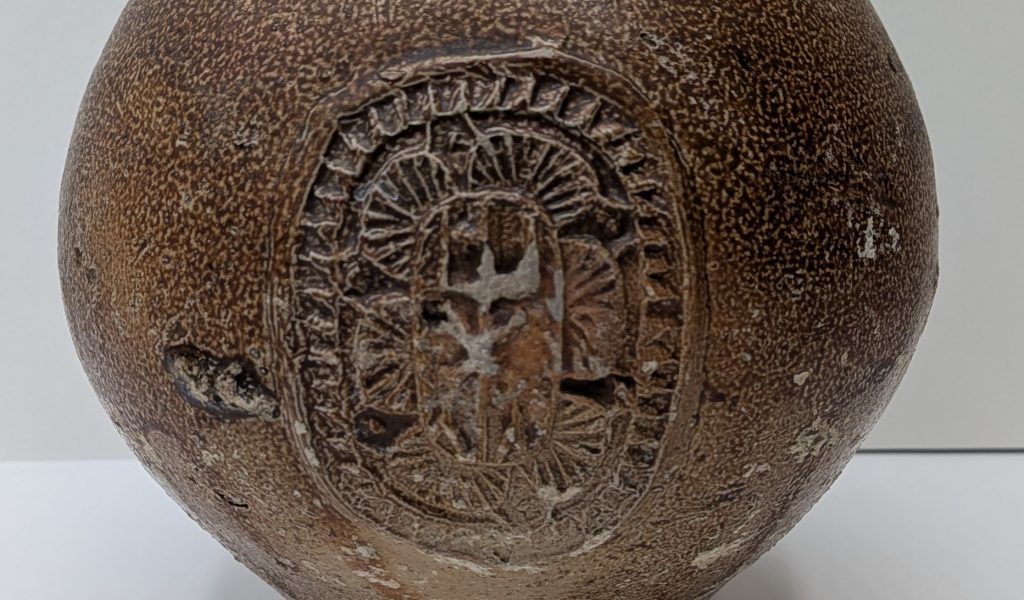

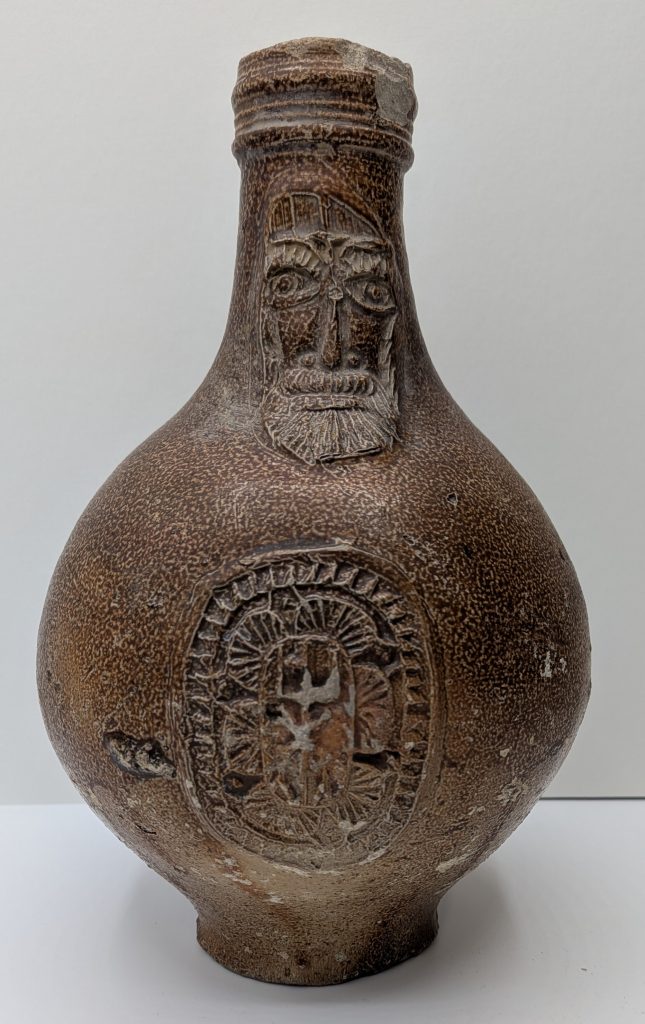
A Bartmann jug (from the German meaning “bearded man”), also called a Bellarmine jug, is a type of salt-glazed stoneware pottery that was manufactured in the Rhineland around the city of Cologne, Germany, throughout the 16th and 17th centuries.
The jugs have a glossy, brown glaze with dimpled texture. This was formed by throwing salt into the kiln during firing, once it was at its highest temperature.
The jugs were named after Catholic cardinal Roberto Bellarmino (1542–1621). Protestants wanted to reform the Catholic church, but the cardinal was against this and called for alcohol to be banned. Protestant Germans cheekily drank ale and wine from jugs they nicknamed Bellarmines as the bearded man on the jug bore a resemblance to the cardinal.
The jugs were more hard wearing than British stoneware and were made in various sizes. They were used for pouring wine, storing alcohol, transporting chemicals, oils and vinegar. When filled with magical ingredients, they were used as witch bottles.
In 17th century England it was common practice to blame any poor fortune or ill health on witches. “Witch bottles” were buried under the entrance or hearth of a person’s home to ward off evil spirits. The magical ingredients could be urine, nail clippings, hair and iron nails. People believed that after being buried the bottle would capture any evil by impaling it on the nails and drowning it in the urine.
Thanks to our volunteers for researching and writing this object of the month.
You may also be interested in
Other popular posts
The Harborough Toys
Rare 17th century wood and bone toys uncovered at the church of St Dionysius.
The Hallaton Helmet by Francesco Galluccio
The amazing replica Roman helmet created for Harborough Museum
Heritage Open Days
We've been giving people a look at unseen areas of The Symington Building