
Our Local Studies Research Volunteer, Tony, has taken a look at the streets of Harborough over the centuries. Find out what has changed and what is still the same in the comparison photos below.
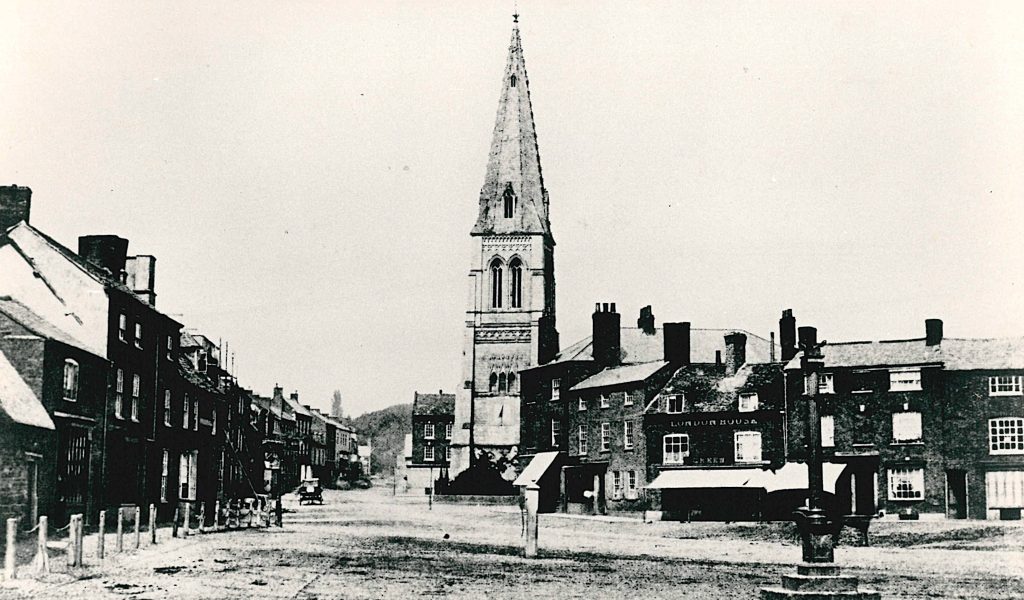
Town centre looking north, 1855
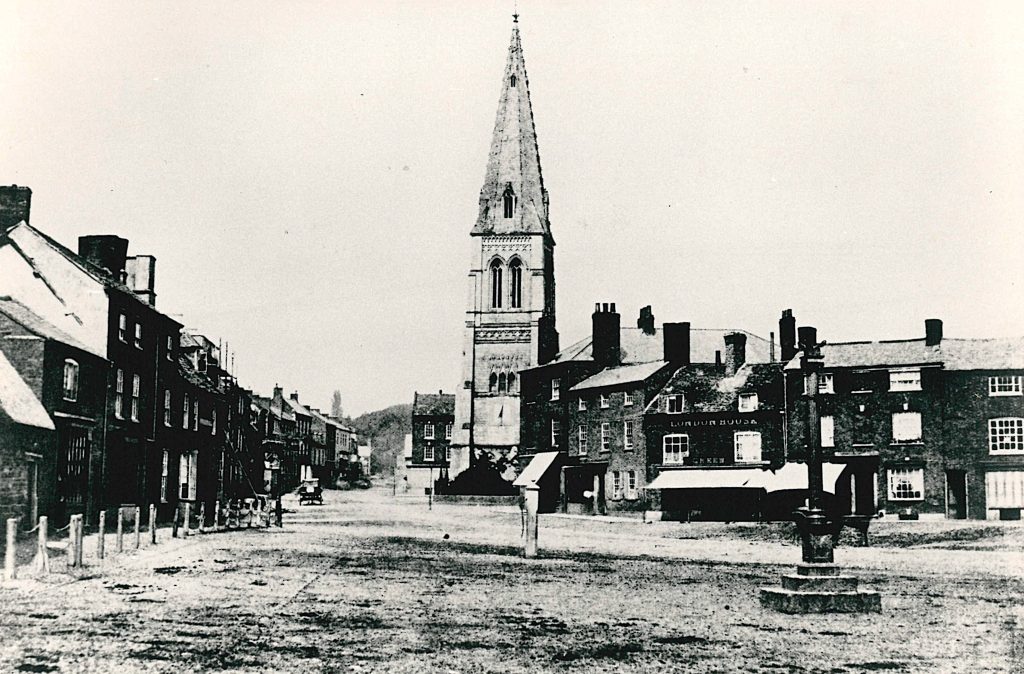
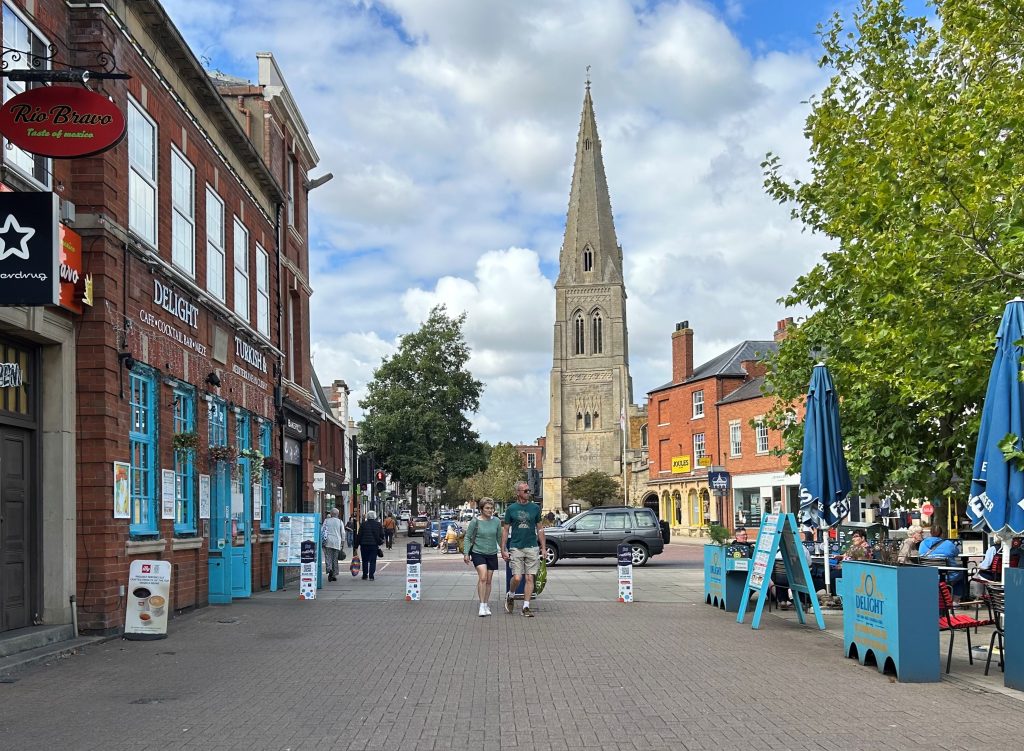
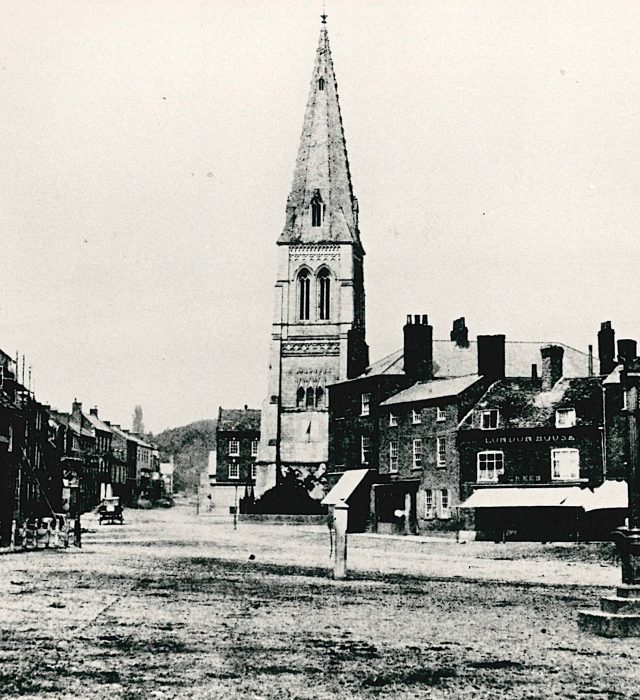
The picture on the left is the earliest photograph of Market Harborough, taken in 1855, by the Revd. William Law. It is one of three shots, taken by Law of the same scene, but each slightly different. Note the oil-fired streetlamp in the middle of the photograph which dates from the 1820s, before gas lighting was introduced in 1833. The posts and chains on the left were put up to keep animals from the western pavement on market days.
East side of upper high street, 1864 -1869
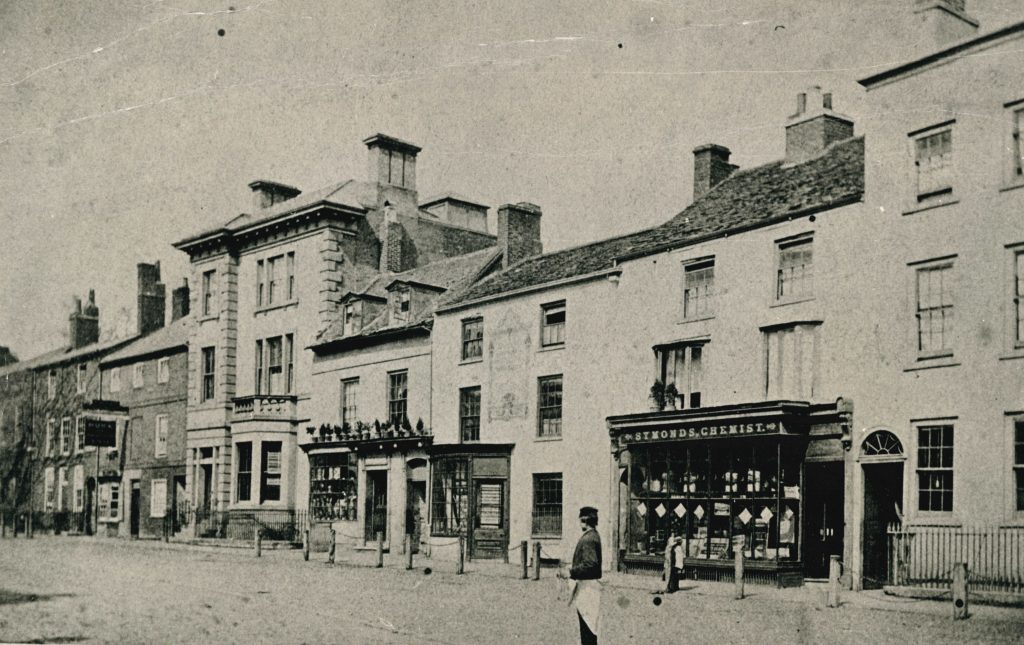
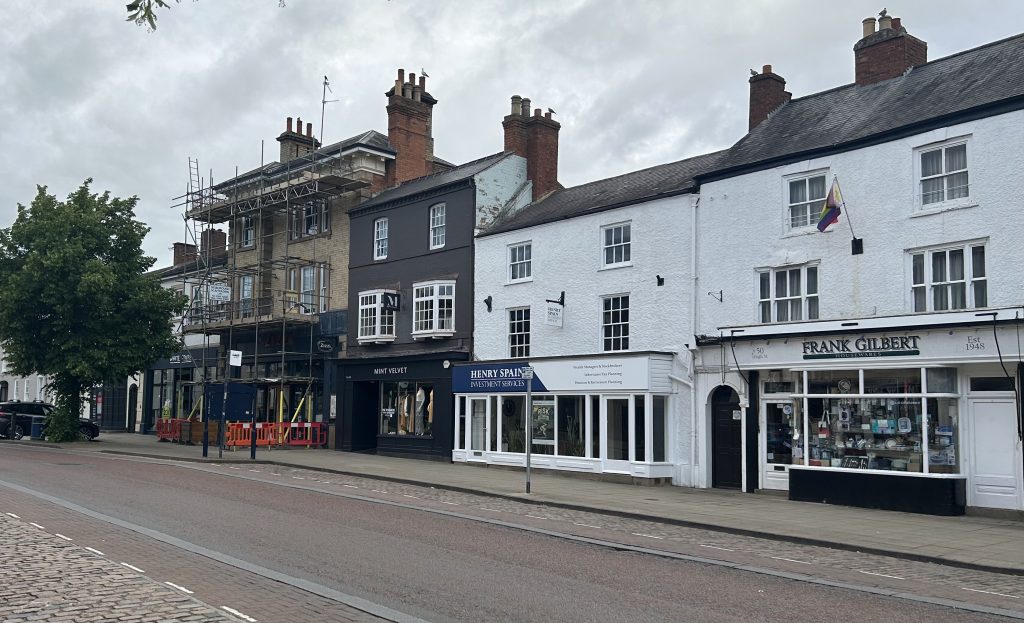
The photograph on the left is of the east side of upper High Street was taken by the first professional photographer in Market Harborough, John Payne Jennings, between 1864 and 1869. The large building to the left is now Zizzi’s Restaurant. Symonds the chemist shop is now Frank Gilbert Housewares.
West side of lower high street, 1875 – 1880
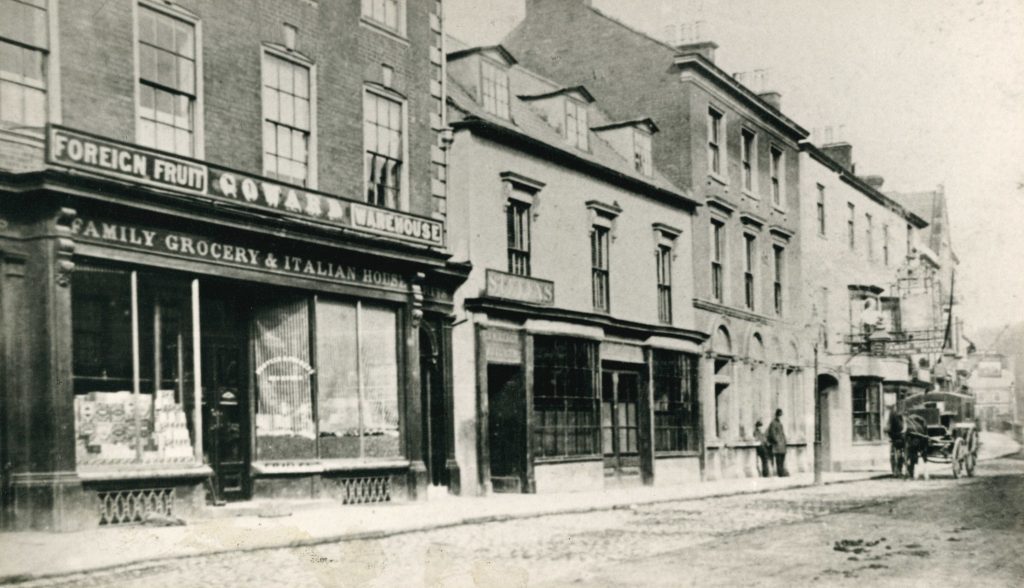
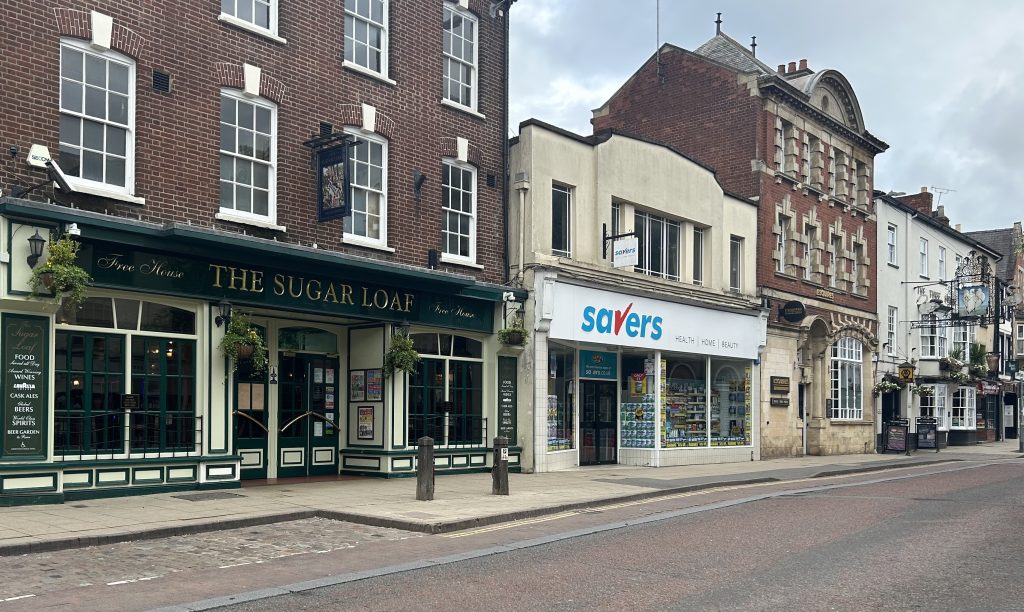
The west side of lower High Street taken between 1875 and 1880 by Edward Hall Speight of Market Harborough. Goward’s grocery store was established in 1810 by Thomas Goward and was in business until about 1910. The building is now occupied by The Sugar Loaf public house.
Looking west along St. Mary’s Road, 1877 – 1879
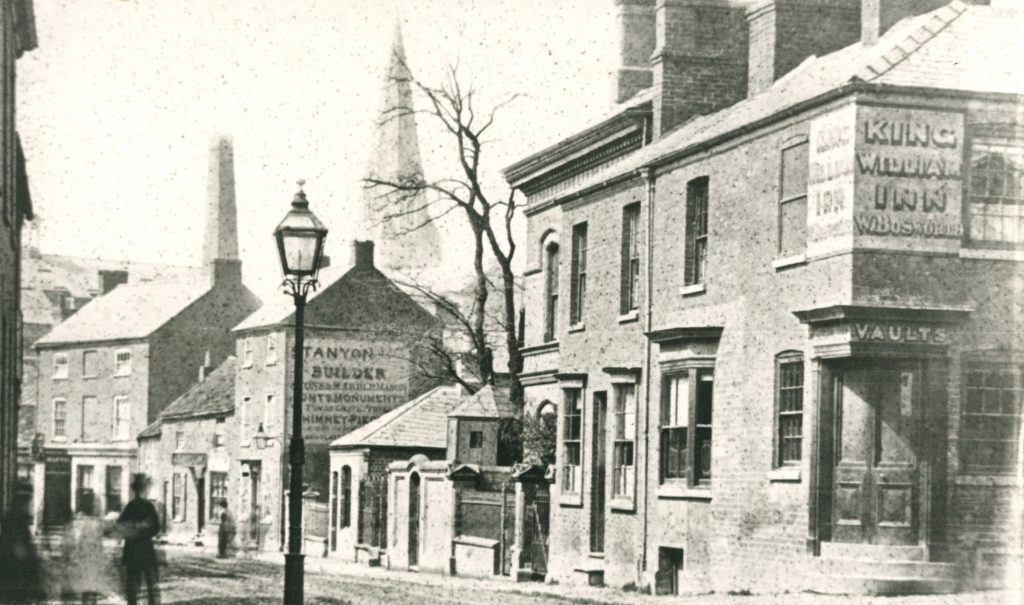
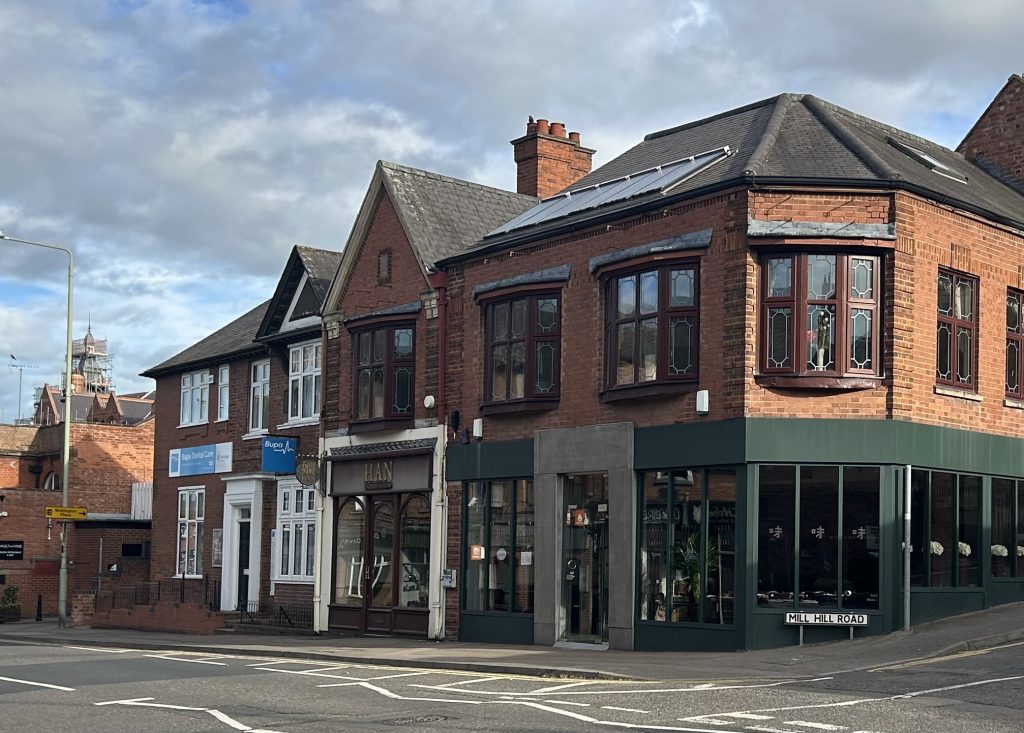
Looking west along St. Mary’s Road at the junction with Mill Hill Road, taken by Edward Hall Speight between 1877 and 1879. The public house is the King William Inn, now the Taste Social restaurant.
Market Place looking east, c.1900
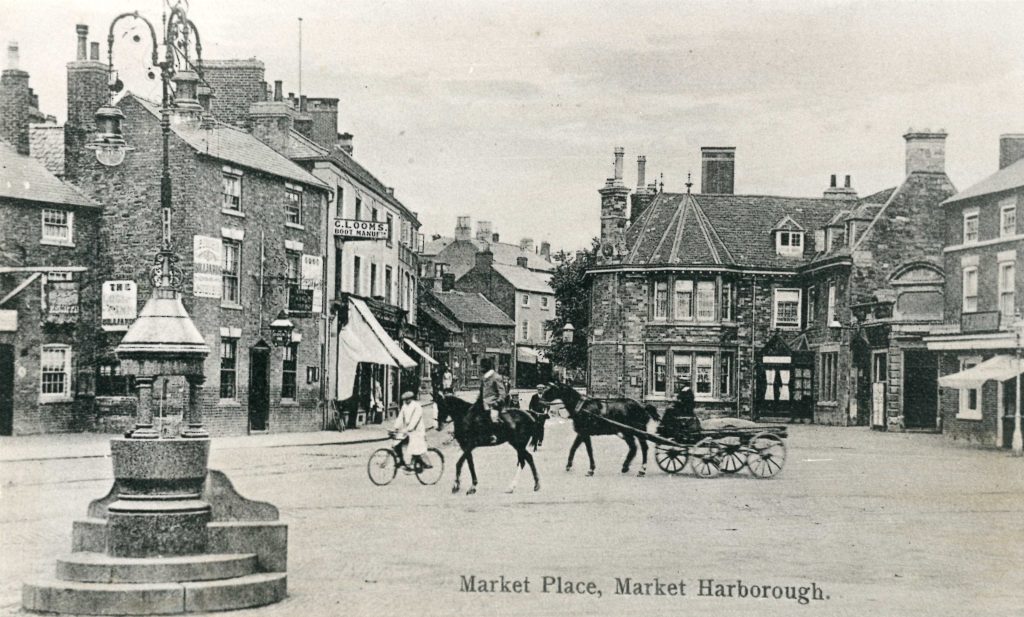
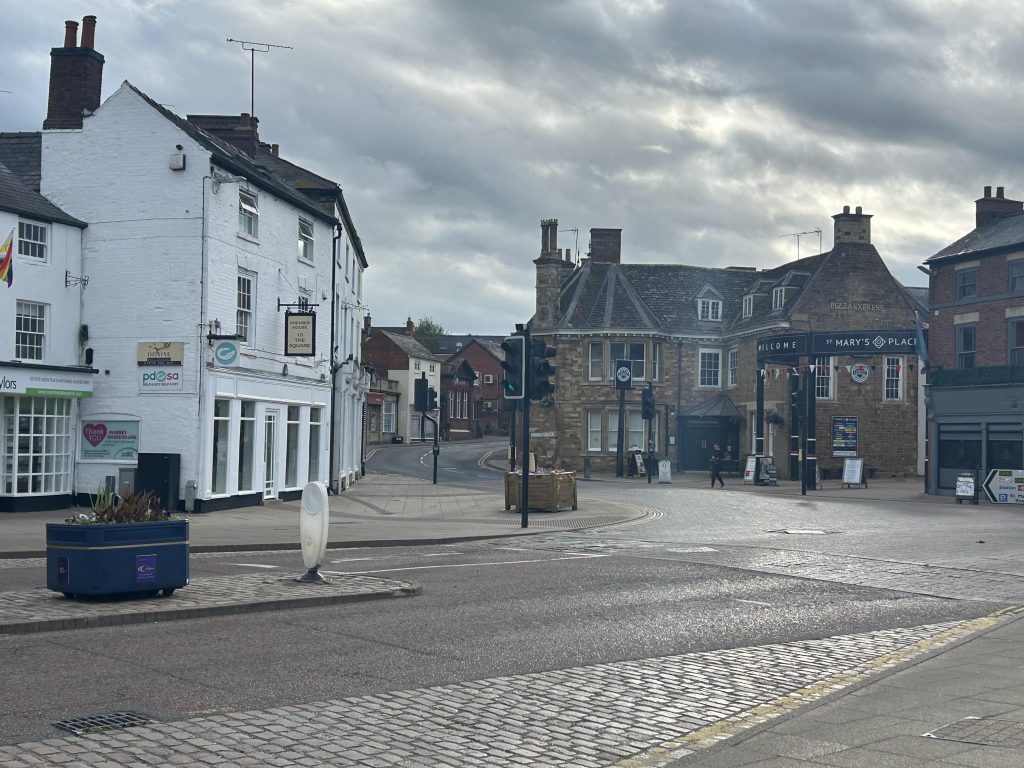
The Market Place looking east, c.1900, photographer unknown, taken as a tourist postcard. The large building on the left was The Cock Inn, which closed after 1971, and the building on the right The Peacock, which closed in 2010 and is now a Pizza Express. The Peacock was once owned by Eady and Dulley, the Market Harborough brewery.
The corner of St. Mary’s Road and Adam and Eve Street, 1911
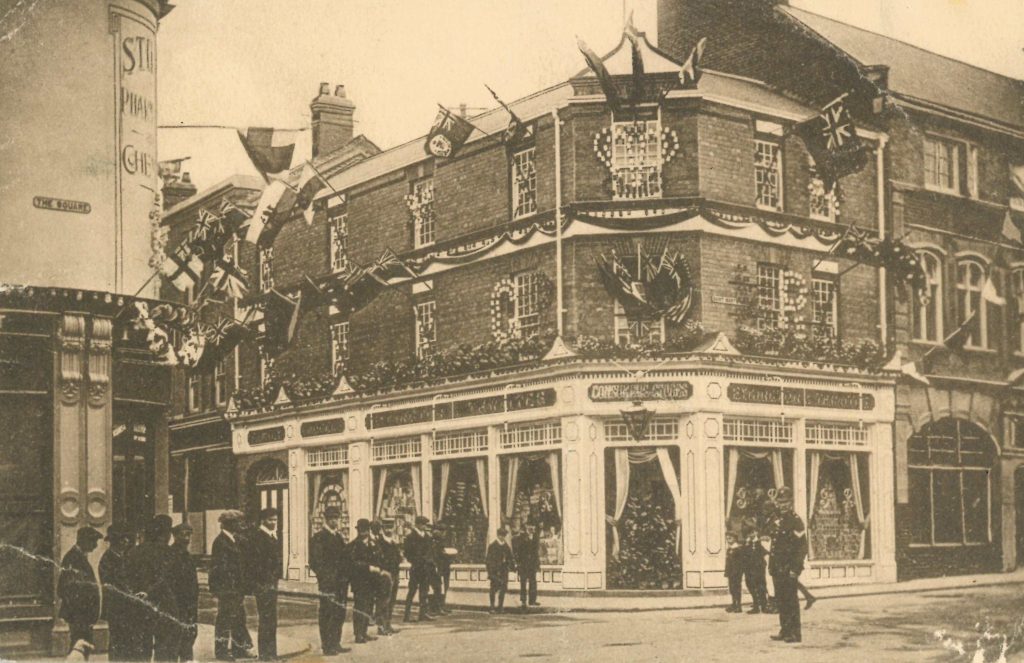
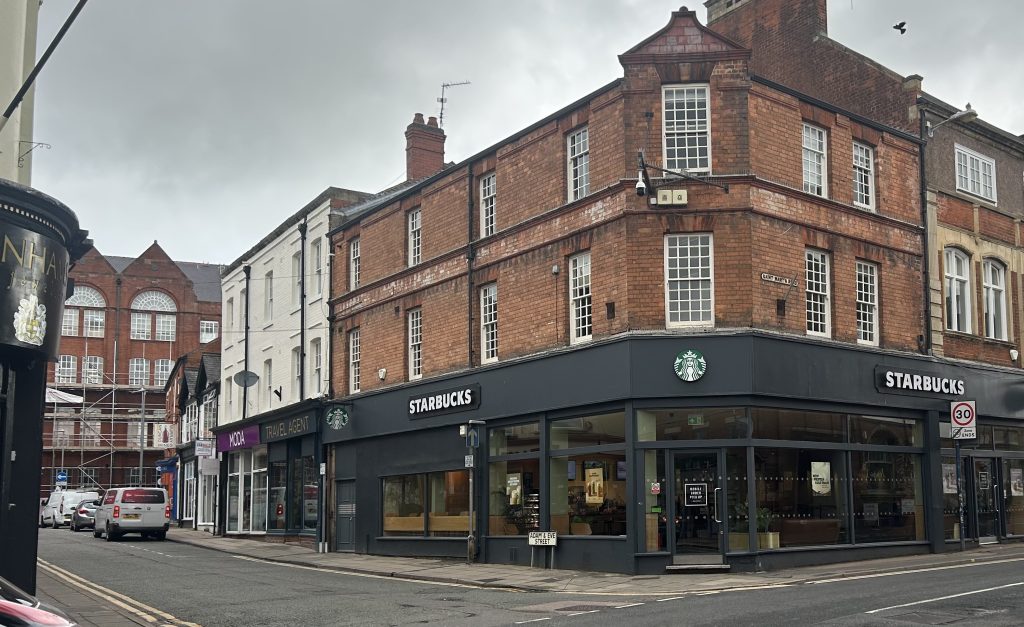
A Symington and Thwaites postcard dated June 1911, on the left, celebrating the coronation of Edward VII. Unfortunately, the coronation had to be postponed at very short notice because the King had been taken ill with an abdominal abscess that required immediate surgery. Symington and Thwaites grocery store was on the corner of Adam and Eve Street and St. Mary’s Road, now occupied by Starbucks. The firm was started by Walter Symington, nephew of James Symington and George Thwaites in 1878. This splendid corner premises was opened in 1894 and continued in business as a high-class grocer until 1960.
St. Mary’s Road facing west towards the square, c.1914
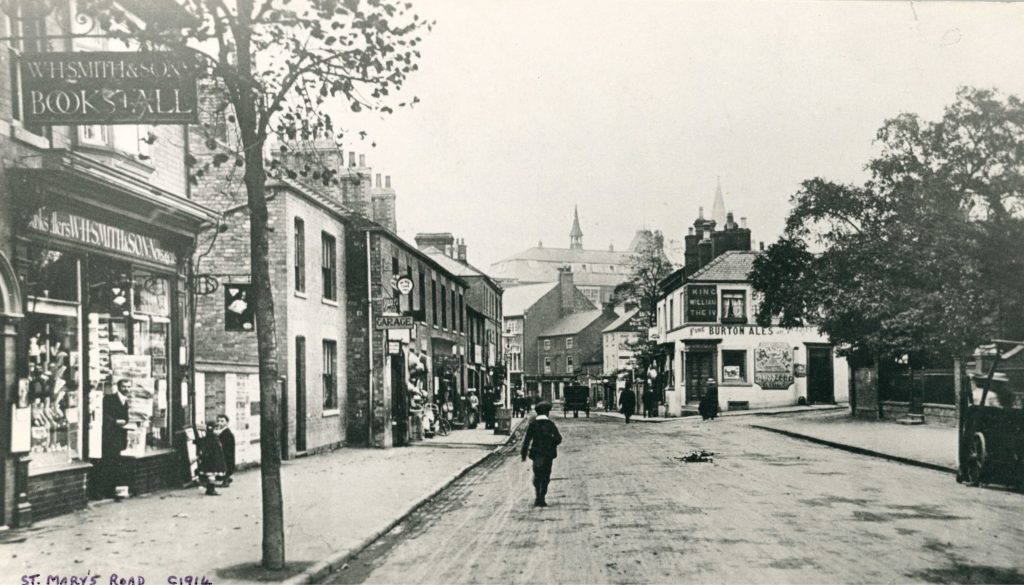
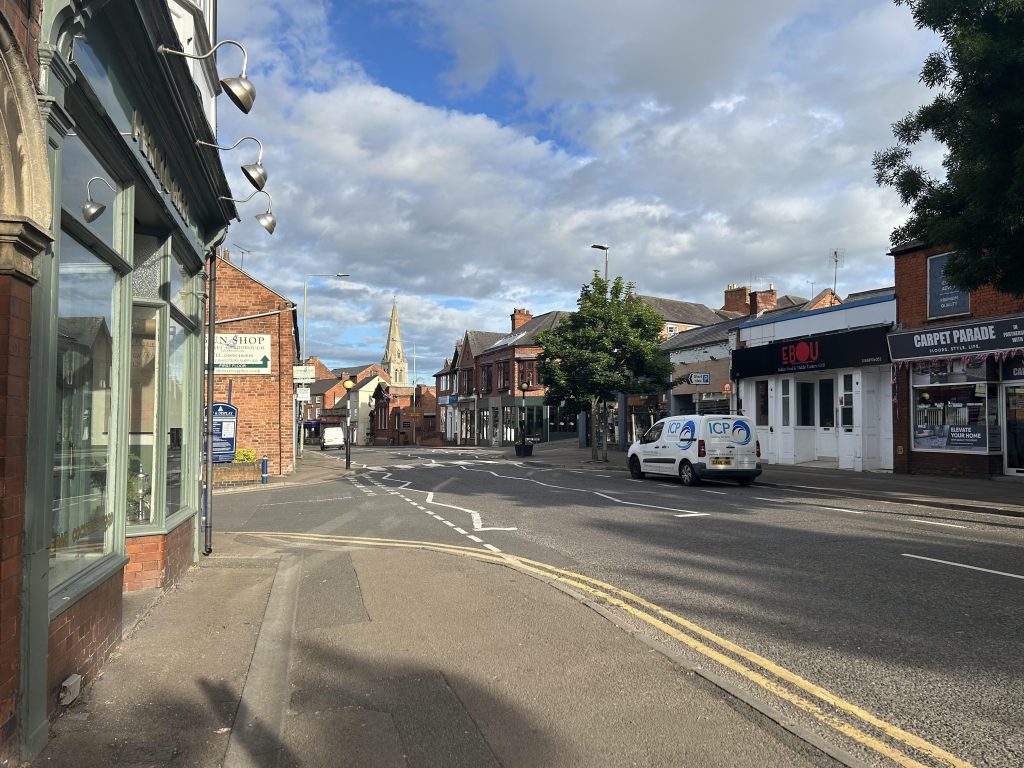
St. Mary’s Road, c.1914, photographer unknown, facing what is now The Square. The spire in the background belonged to the Symington Factory. Despite there being a garage nearby, the dung cart still has work to do. The W.H. Smith bookstore, left, later relocated to the High Street and the building is now The Everest Lounge. It is interesting to note the ales sold by the King William Inn on the right are Everard’s Burton Ales. The Everard Brewery started in Leicestershire before expanding to Burton–on-Trent in the 1890s to use the town’s famous brewing water, before returning solely to Leicestershire.
Catherwood House and the square with war memorial, 1930
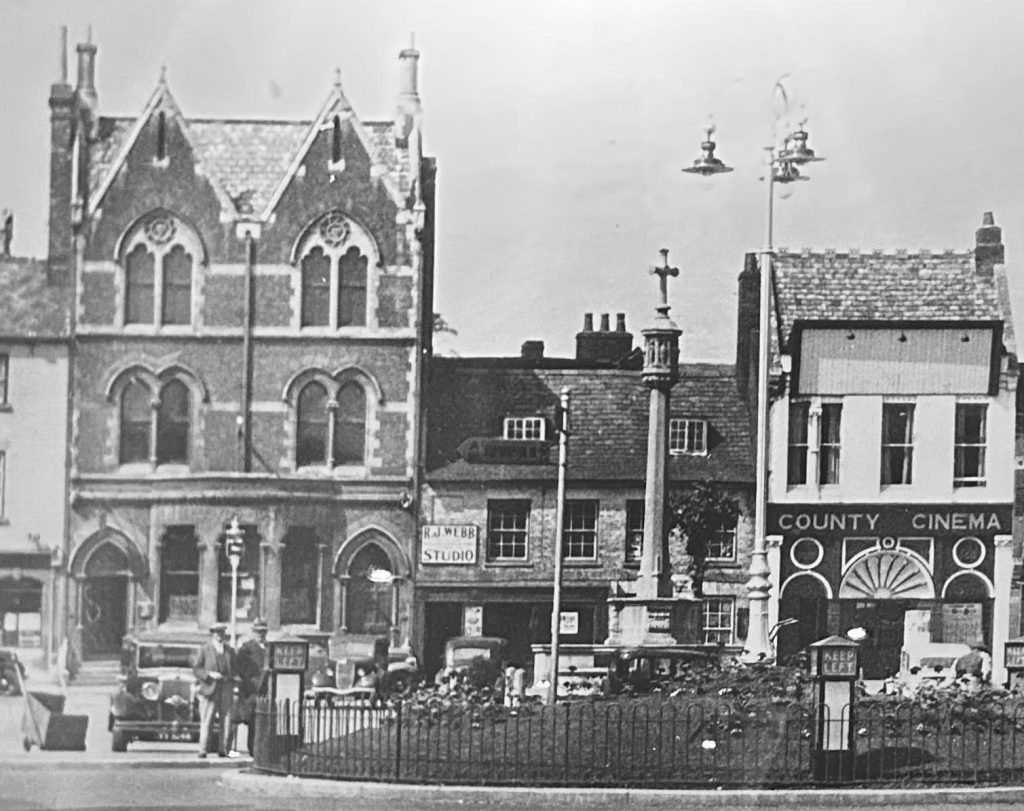
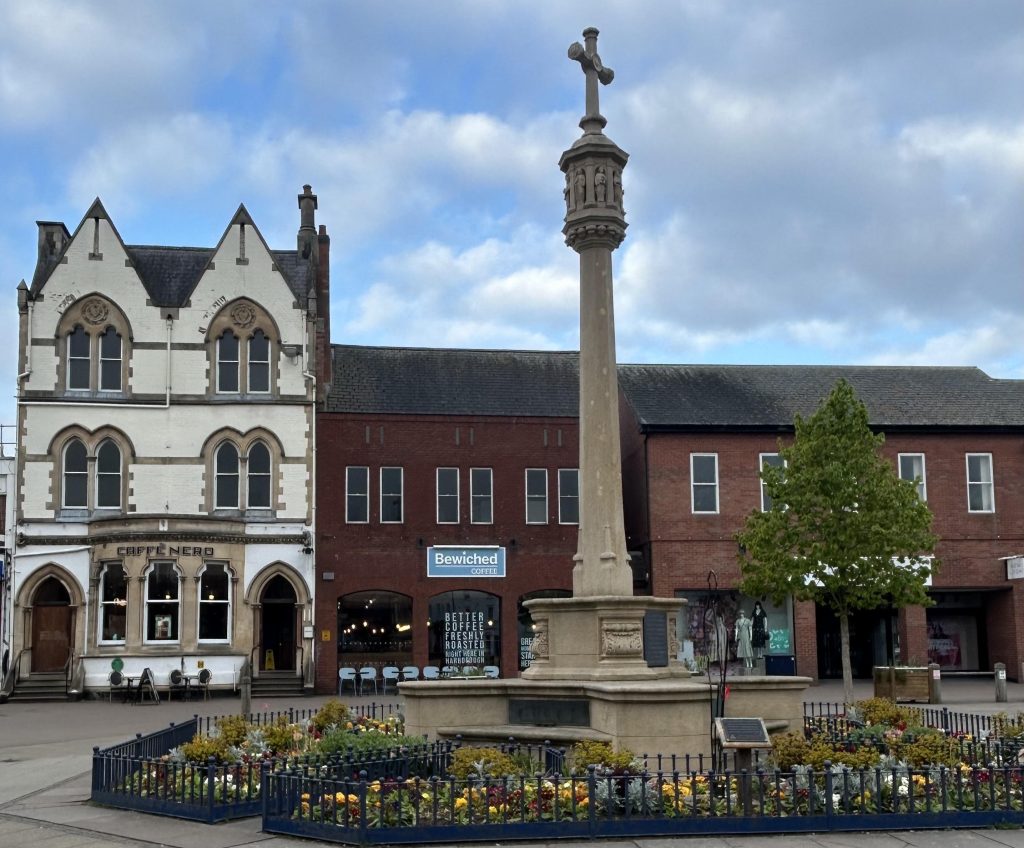
Catherwood House and The Square, 1930, photographer unknown. A copy of a photograph on display in The Sugar Loaf public house in the High Street. The County Cinema on the right originally opened in November 1911 as the County Electric Palace, it was renamed the County Cinema after modernisations in 1912. At the outbreak of World War II in September 1939, the building was requisitioned by the government for storage and never reopened as a cinema. It later served as a dance studio, a music club, and an antique shop before eventually being demolished.
Jeyes Chemist Shop, Church Square, 1970
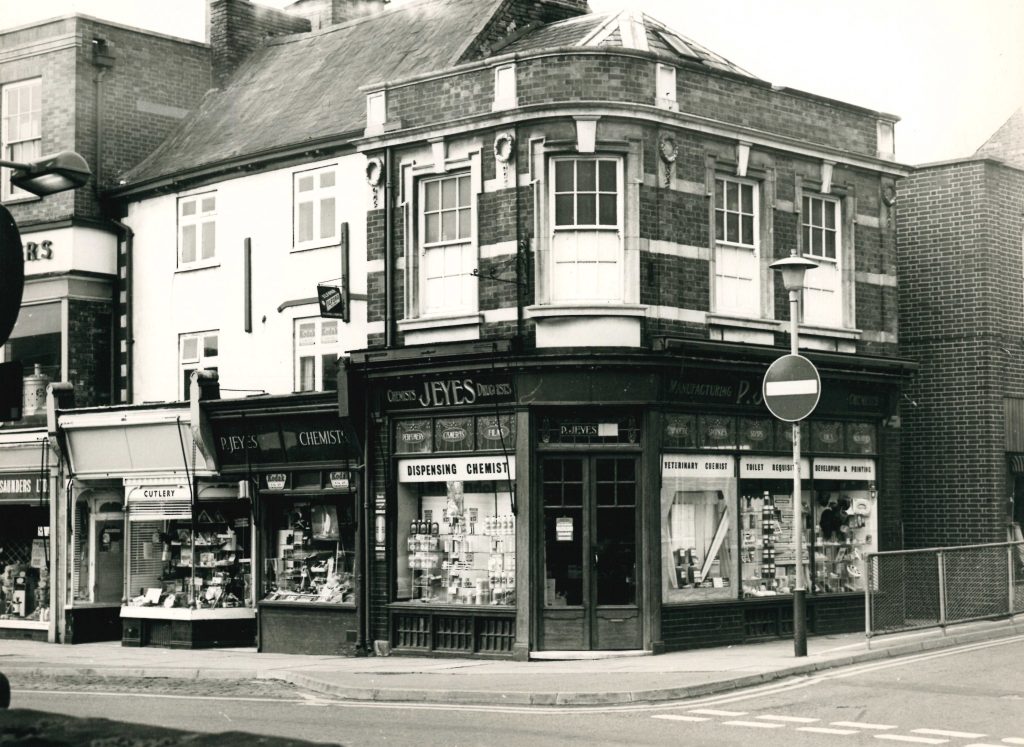
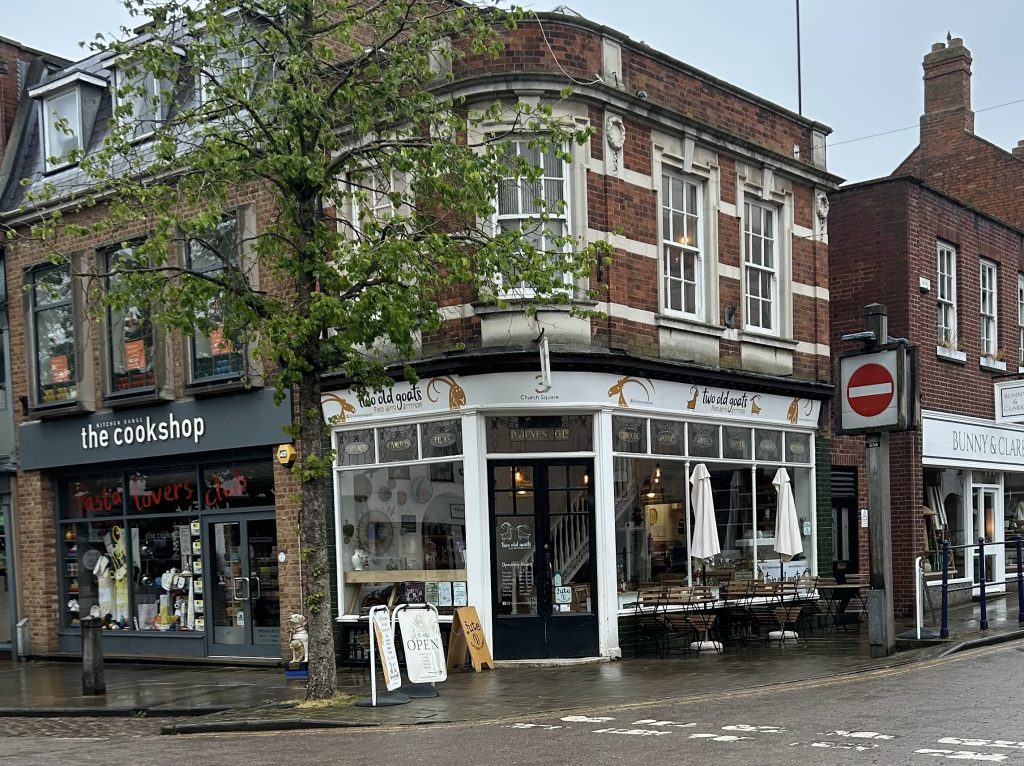
Jeyes Chemist Shop, Church Square 1970, photographer unknown. The history of the Jeyes Group spans over two centuries, evolving from a 19th century apothecary in Northamptonshire into two distinct entities, Jeyes Fluid and Jayes of Earl Barton. The present occupiers of the building, Two Old Goats café, discovered the faded signage when renovating in 2023.
Adam and Eve Street looking south towards St. Mary’s Road, 1973
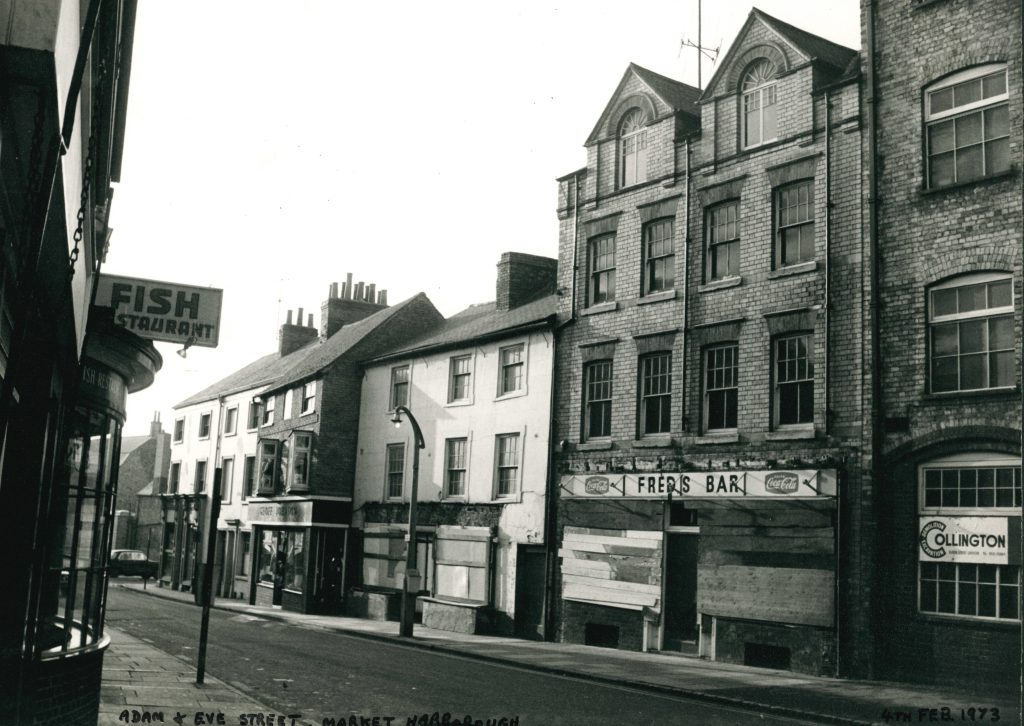
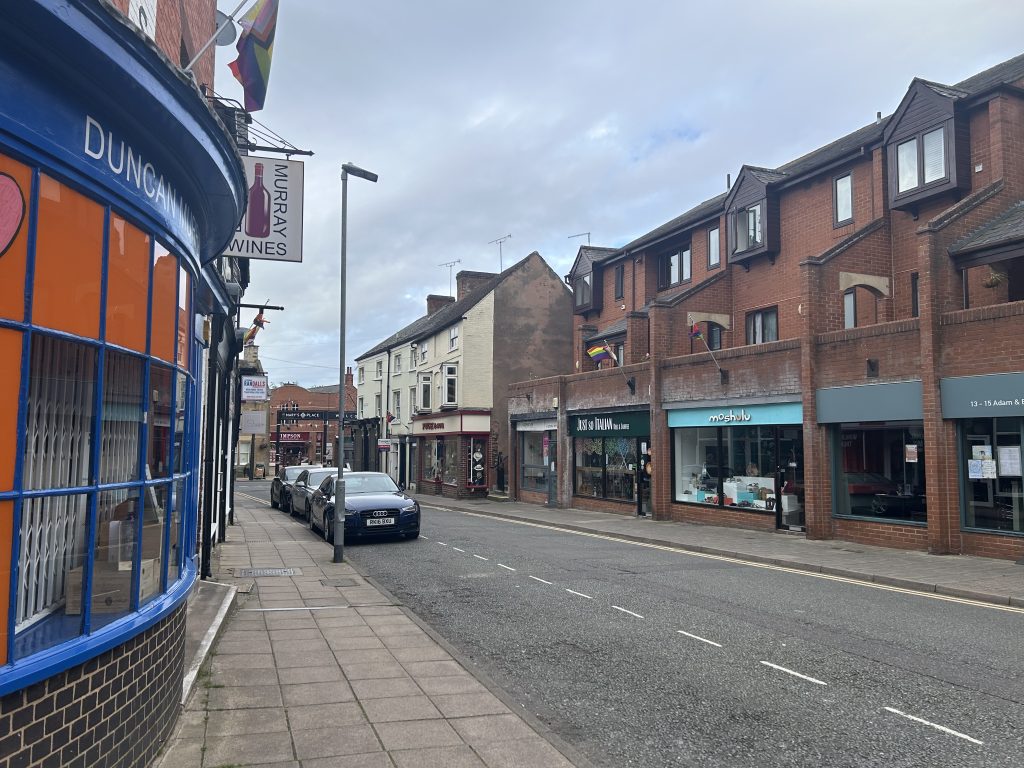
The photograph on the left is on Adam and Eve Street looking south from Taylor’s Fish Restaurant, now Duncan Murray Wines. This was taken in February 1973 by Michael C. Brown looking towards the Symington Factory, before it was demolished later that year. The factory has been replaced by shops and restaurants. The Pugh and Son leather goods and heritage apparel can be seen in the centre left of both pictures.
To create this exhibition, I am indebted to Denise Wilding and Tim Savage of Harborough Museum, and the Harborough Museum for their archived photographs.
Steve Driver, local Harborough resident and photographer.
The Sugar Loaf, Market Harborough for copying one of their photographs.
You can find out more in these books in Local Studies, at the back of the museum:
Aucott, P. and Mastoris, S. (1992) Harborough in Camera, Stroud: Sutton Publishing Ltd.
Davies, J.C. and Brown, Michael C. (1980) Yesterday’s Town: Victorian Harborough, Buckingham: Barracuda Books Ltd.
Mastoris, S. (1989) Britain in Old Photographs: Around Market Harborough, Stroud: Budding Books.
By Anthony Cherrington, Harborough Museum, Local Studies Research Volunteer. September 2026.
You may also be interested in
Other popular posts
The Harborough Toys
Rare 17th century wood and bone toys uncovered at the church of St Dionysius.
The Hallaton Helmet by Francesco Galluccio
The amazing replica Roman helmet created for Harborough Museum
Heritage Open Days
We've been giving people a look at unseen areas of The Symington Building